A premium visiting card should do more than look expensive. Its design should make important information easy to understand, its finish should suit everyday handling, and its functionality should help the recipient take a useful next step.
Before choosing between premium custom visiting cards, consider how the card represents your business and what you want someone to do after receiving or viewing it. Good decisions begin with clarity, not with the most decorative option.
Design that guides the eye
Visual hierarchy is the order in which people notice and understand information. Size, contrast, spacing and placement should guide the eye instead of giving every element equal emphasis. Use readable fonts and leave enough space around important details.
A useful sequence is your name or business first, supporting details next, and then one clear action such as “Scan to explore my work.” An architect, for example, might link the card to a selected portfolio rather than crowd the printed surface with project descriptions.
Customization is more than adding your name and logo. Ask which colours, layouts, fonts and printed elements you can change, whether both sides can be personalized, and whether you will approve a design proof before printing. This helps you distinguish a genuinely custom visiting card from a standard template with your details added.
A finish that suits everyday use
Textured paper can feel distinctive, while matte finishes usually reduce glare and fingerprints. Gloss can make colours appear vivid but may reflect light. PVC, metal and wooden cards offer different weight, texture and durability, so the right choice depends on how and where you network.
Review a design proof, close-up photographs or a demonstration before ordering. Check whether small text remains readable, whether the surface shows scratches or fingerprints easily, and how the card responds to repeated handling.
Unlike paper cards that are commonly handed over, an NFC visiting card is generally kept and reused. That makes everyday durability and comfort as important as the first visual impression.
A QR code designed to scan reliably
A business card with QR code access needs more than an attractive pattern. More encoded data generally creates a denser QR pattern, and a denser pattern may need a larger printed size for reliable scanning. Complete contact details can require more data than a short URL.
A short URL does not automatically make the destination editable. Information can be updated without reprinting only when the encoded URL remains valid and the destination or service supports updates.
Print quality, scanning distance and error-correction level also affect sizing, so there is no single minimum size that works for every QR code. Keep a clear quiet zone of at least four modules on every side, use strong contrast, and test the code at its final printed size on several phones.
Bringing design and functionality together
ARG Transform’s Pro Elite edition combines a customized NFC business card with a personalized digital profile. The existing product includes a custom printed design, social links and contact analytics, with profile access provided for one year.
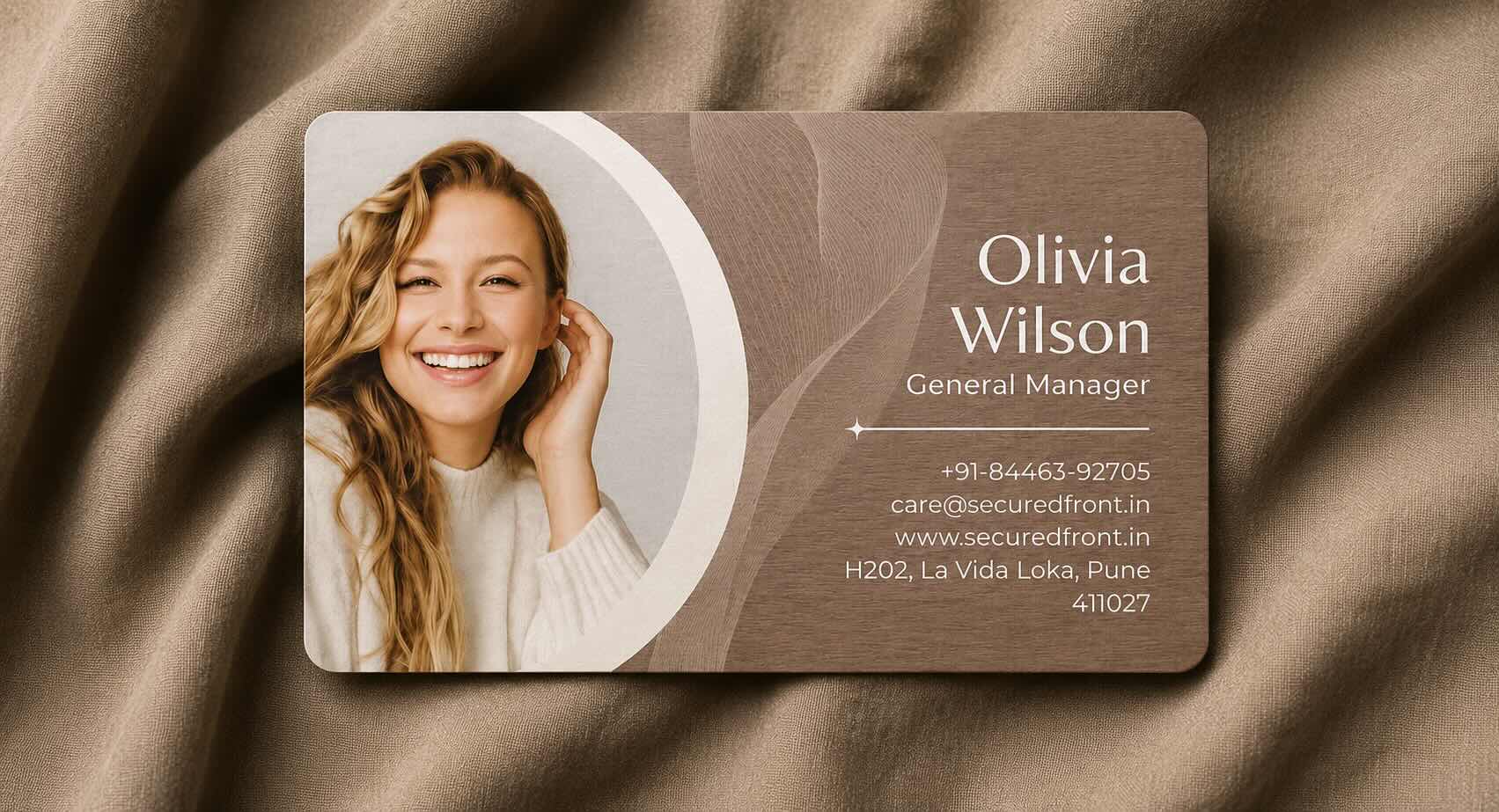
Recipients can tap with a compatible phone or scan the QR code to view and save contact details and open supporting content such as a business profile, brochure or introductory video. They do not need to install an app. Because the digital profile carries annual renewal terms, review those terms when comparing long-term costs.
See how a customized card and digital profile work together.
Explore Pro Elite